
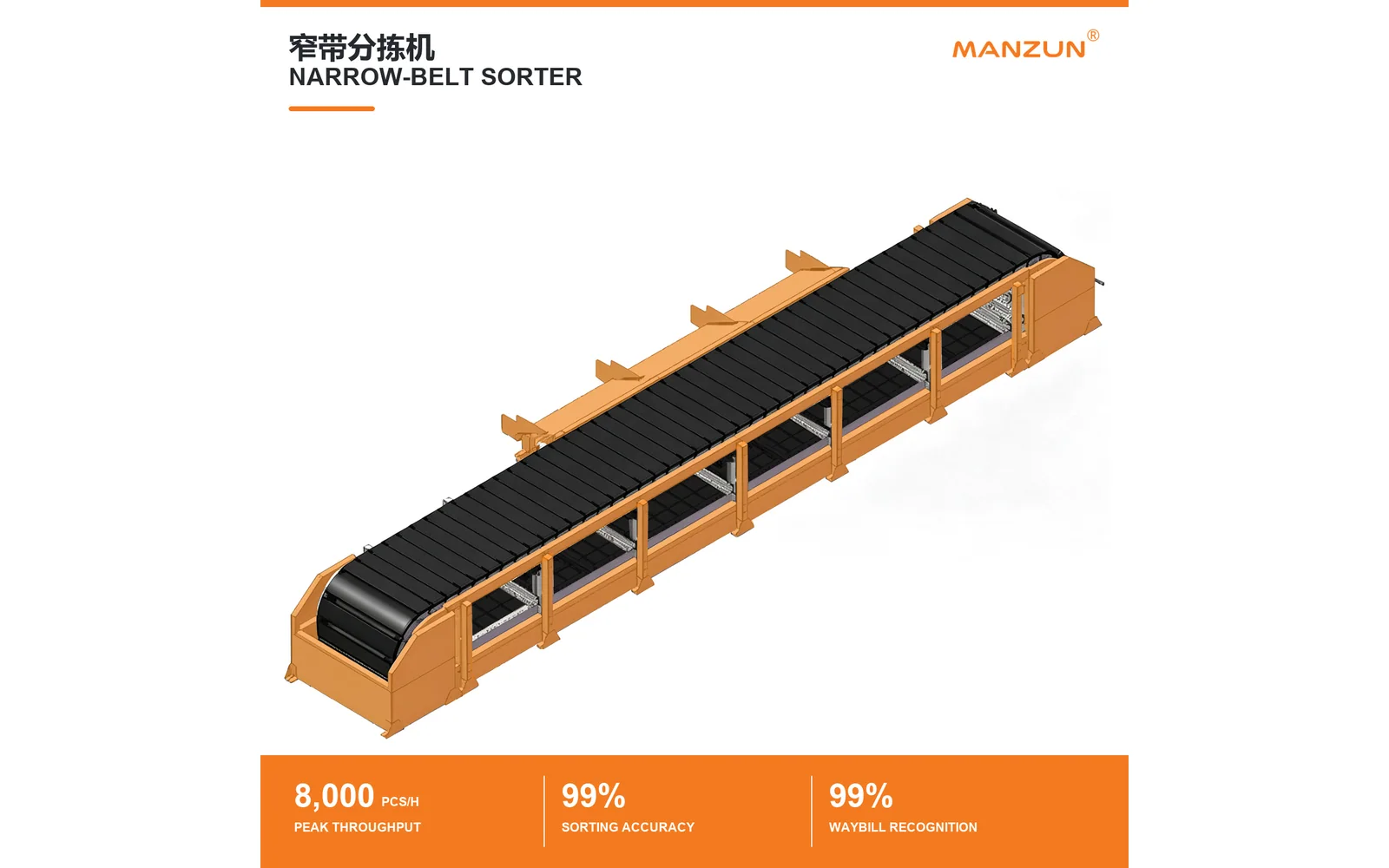
A narrow-belt sorter moves parcels along a straight carrier line and activates the belt on the selected carrier at the assigned destination. It is an option for mixed flows of cartons, soft bags, thin items and parcels that need controlled lateral discharge. The choice starts with real parcel samples, not a catalogue speed.
Which parcels should be tested before selecting a narrow-belt sorter?
Record the smallest and largest parcel footprint, weight, bottom material and packaging stability. Test soft bags that can fold, thin items that can bridge a gap and cartons with an uneven base. These conditions affect carrier width, the number of carriers supporting one parcel and whether it remains stable during sideways transfer.
The contact between parcel and belt matters as much as parcel dimensions. A sample test should observe induction, travel and discharge, including where the item lands after leaving the main line. An item that rides well on the carrier may still catch at a chute edge or enter a collection container poorly.
How should the main line and destination chutes connect?
We plan the chute entrance level with the carrier discharge surface. The receiving edge should accept the sideways parcel without an unnecessary step; the chute then slopes toward collection. Chute angle, lining, width and buffer space follow the tested parcel mix and the intended collection method.
A line can place destinations on one or both sides. Destination pitch, available building length and access for clearing full chutes all influence the layout. The useful number of routes is therefore a system decision, not simply a count of openings in the frame.
What information is needed for a capacity estimate?
Share peak-hour volume, route count, parcel samples, induction method and the expected exception flow. We assess feeding consistency, carrier pitch, destination availability and recirculation together. The product reference lists a typical 6,000–8,000 parcels per hour and 1.8–2.2 m/s for a defined configuration; these figures are planning references rather than a guarantee for every site.
Before finalising the equipment, we also confirm barcode or other identification, the warehouse or sorting-system interface, unread-label handling and maintenance access. This connects the narrow-belt machine to a usable receiving-to-dispatch flow.
Published on 2026-09-23. Product information reflects the publication date; contact us for current specifications and availability.