
A linear sorter places induction, parcel tracking and destination discharge along a straight route. It suits a building that favours a long line with collection on one or both sides. “Linear” describes the layout; the carrier, belt or divert mechanism still has to be selected for the actual parcel mix.
What decides the length of a linear sorter?
Start with active destinations and the collection method at each one. Route count alone does not define machine length. Chute spacing, operator access, takeaway conveyors, maintenance clearance and any space kept for future routes all use floor length. A plan should show these working areas, not only the main track.
The induction end needs enough room to present one traceable parcel at the intended spacing. The identification point must connect each package to its route before the first possible discharge. We also reserve a defined path for unread labels, parcels outside the accepted size range and packages that cannot enter a full destination.
How do one-sided and two-sided chutes change the design?
Destinations on both sides can use the available line length differently, but they also need access on both sides for containers, operators and service. One-sided collection may simplify work in a narrow building. We compare both plans against real walking paths, fire access and downstream collection rather than assuming that one arrangement is always denser.
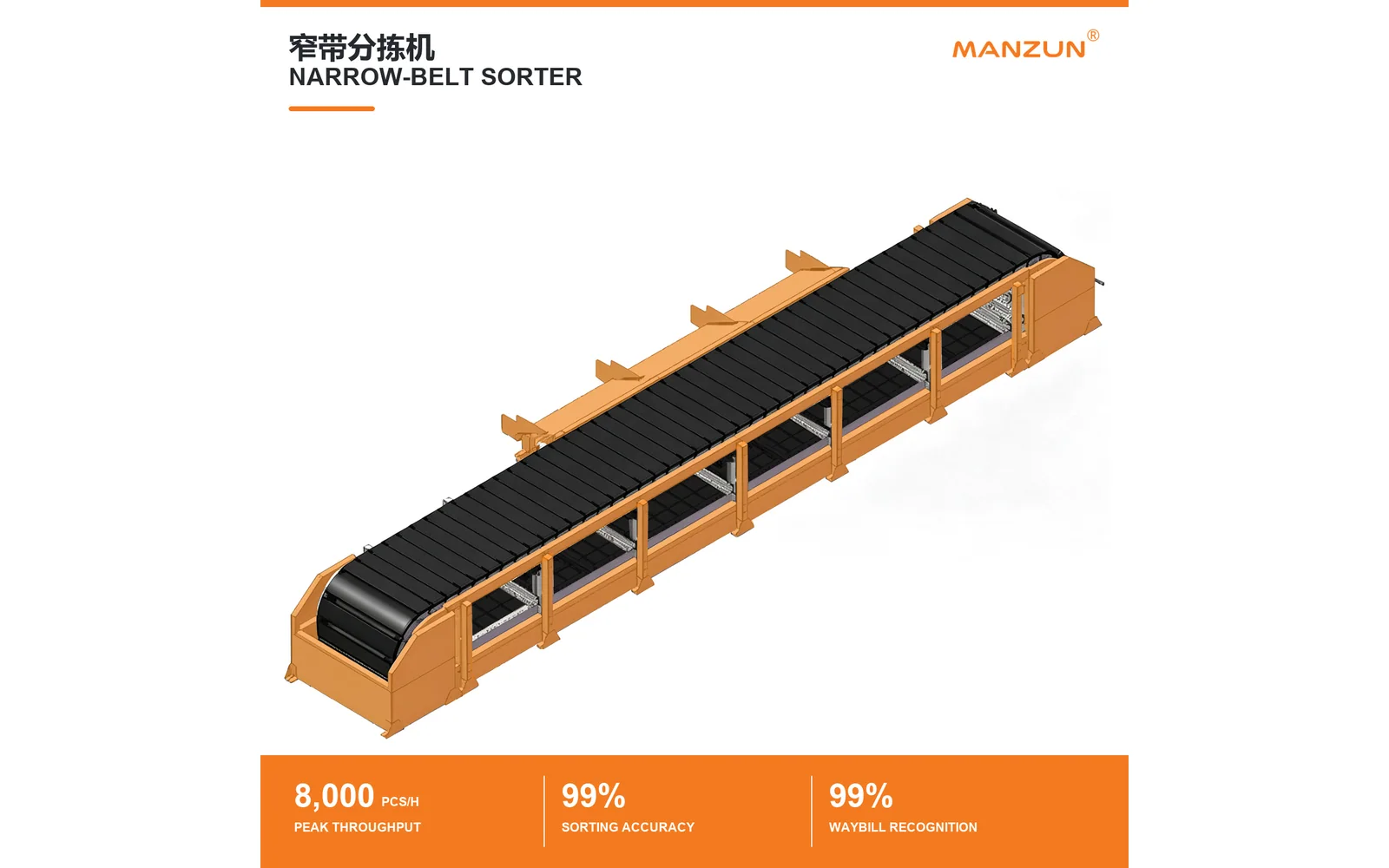
The discharge method follows the item. A narrow-belt carrier provides controlled sideways transfer; a different cart or belt module may fit another parcel profile. For mixed soft bags, thin items and cartons, representative samples reveal stability issues that drawings alone cannot settle.
What should be included in the capacity discussion?
Peak-hour parcels, induction positions, carrier spacing, destination availability and recirculation belong in one calculation. The product catalogue defines throughput and speed for a linear sorter from the selected technology and site design, so no universal figure should be copied onto an unspecified layout.
We request a building plan, parcel samples, route table and dispatch schedule before proposing a linear sorter. That lets the machine, data interfaces and collection operation be reviewed together.
Published on 2026-09-23. Product information reflects the publication date; contact us for current specifications and availability.